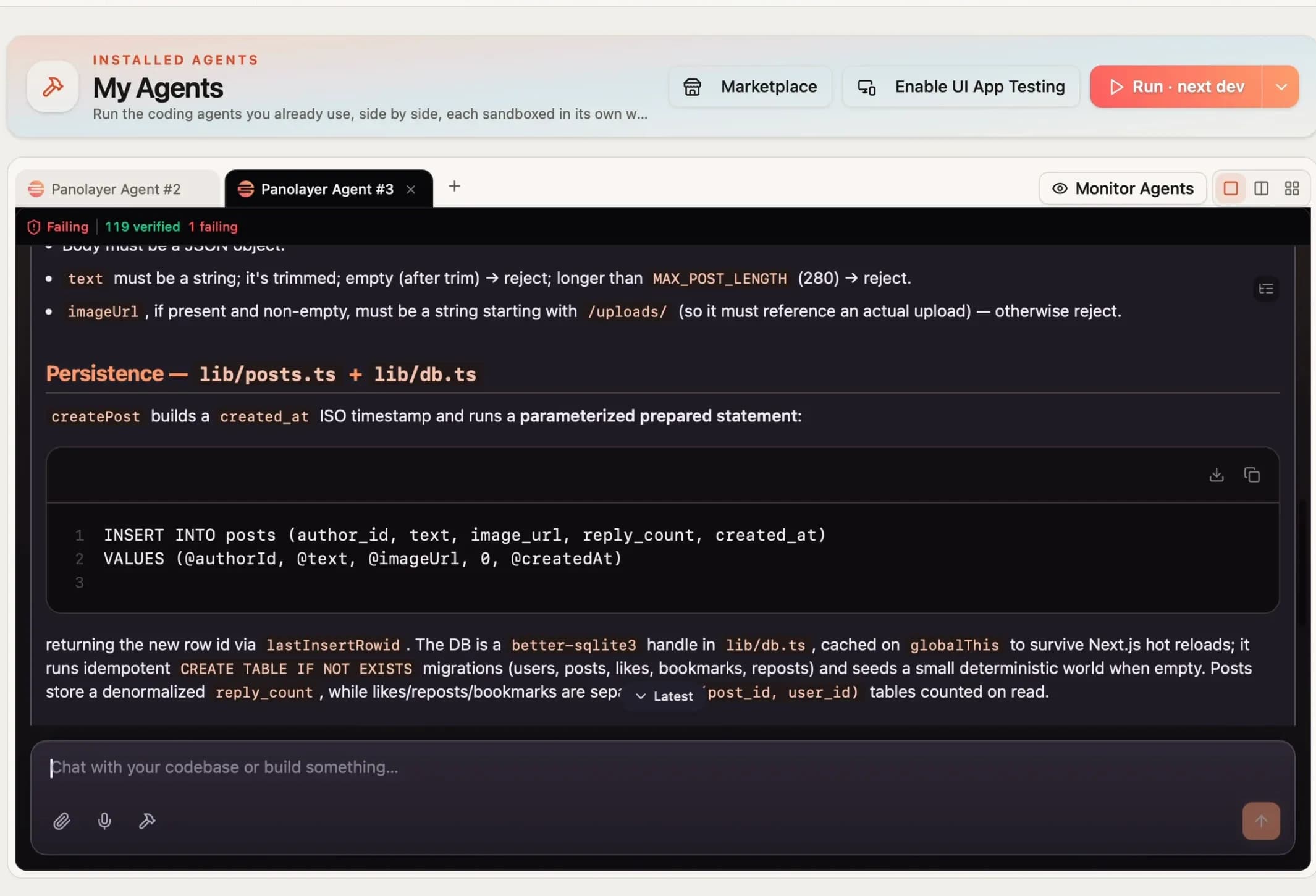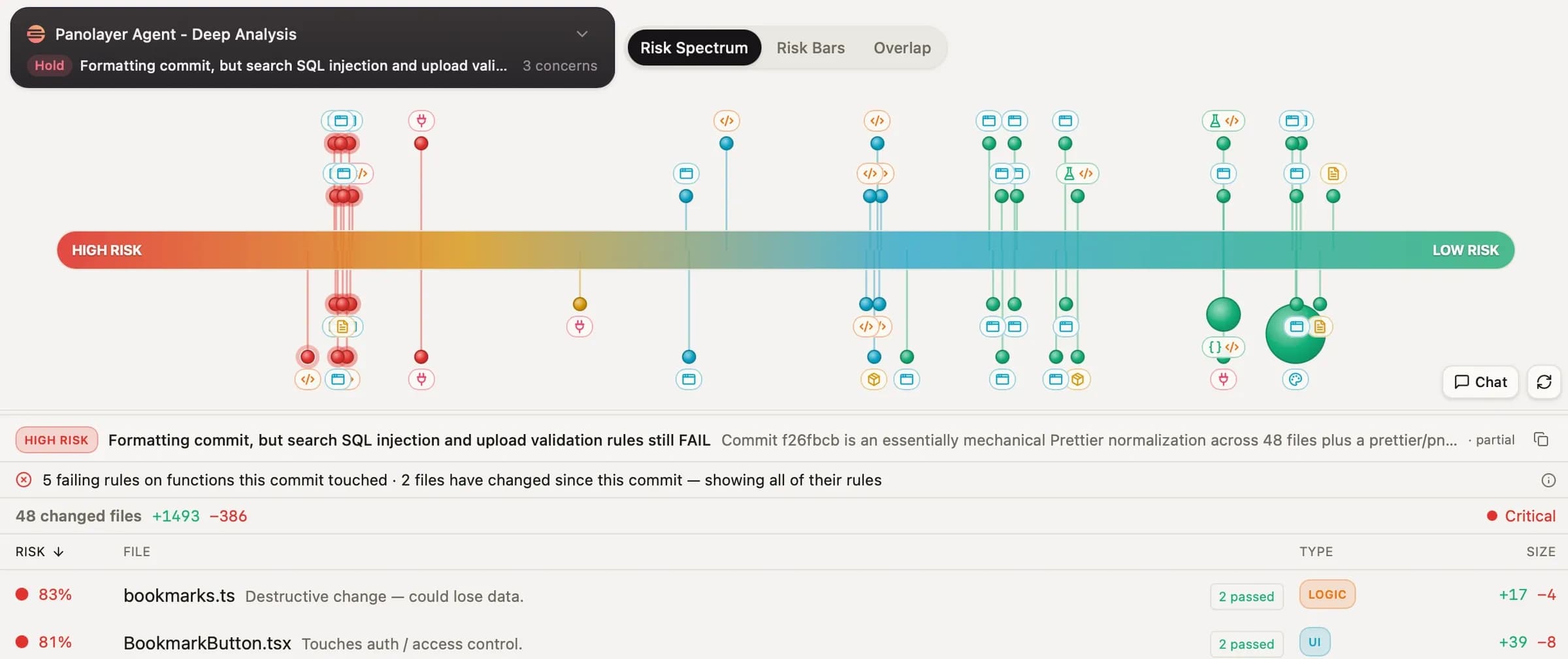
A completed task is not the same thing as a ready change. The gap between the two is where most of the engineering decision lives — and it is the part a task list cannot capture.
A small change can cross a large boundary
Imagine a lookup that used to return a user or throw an error. An agent adds support for returning null. The new lookup behaves as requested, but a profile renderer still reads user.name without a guard. The changed function and the unchanged caller now disagree. This example is illustrative, not a published product finding.
Keep intent connected to implementation
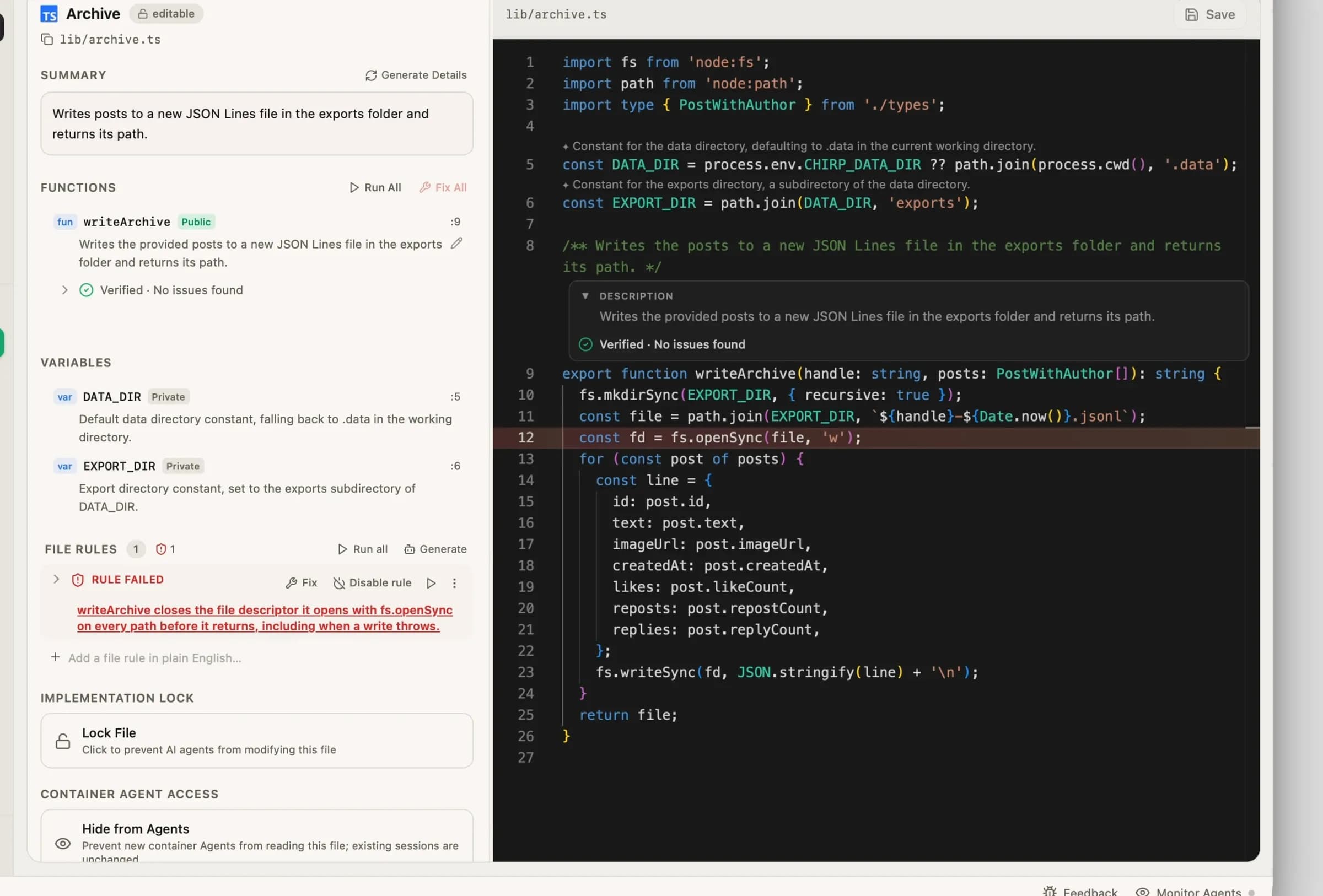
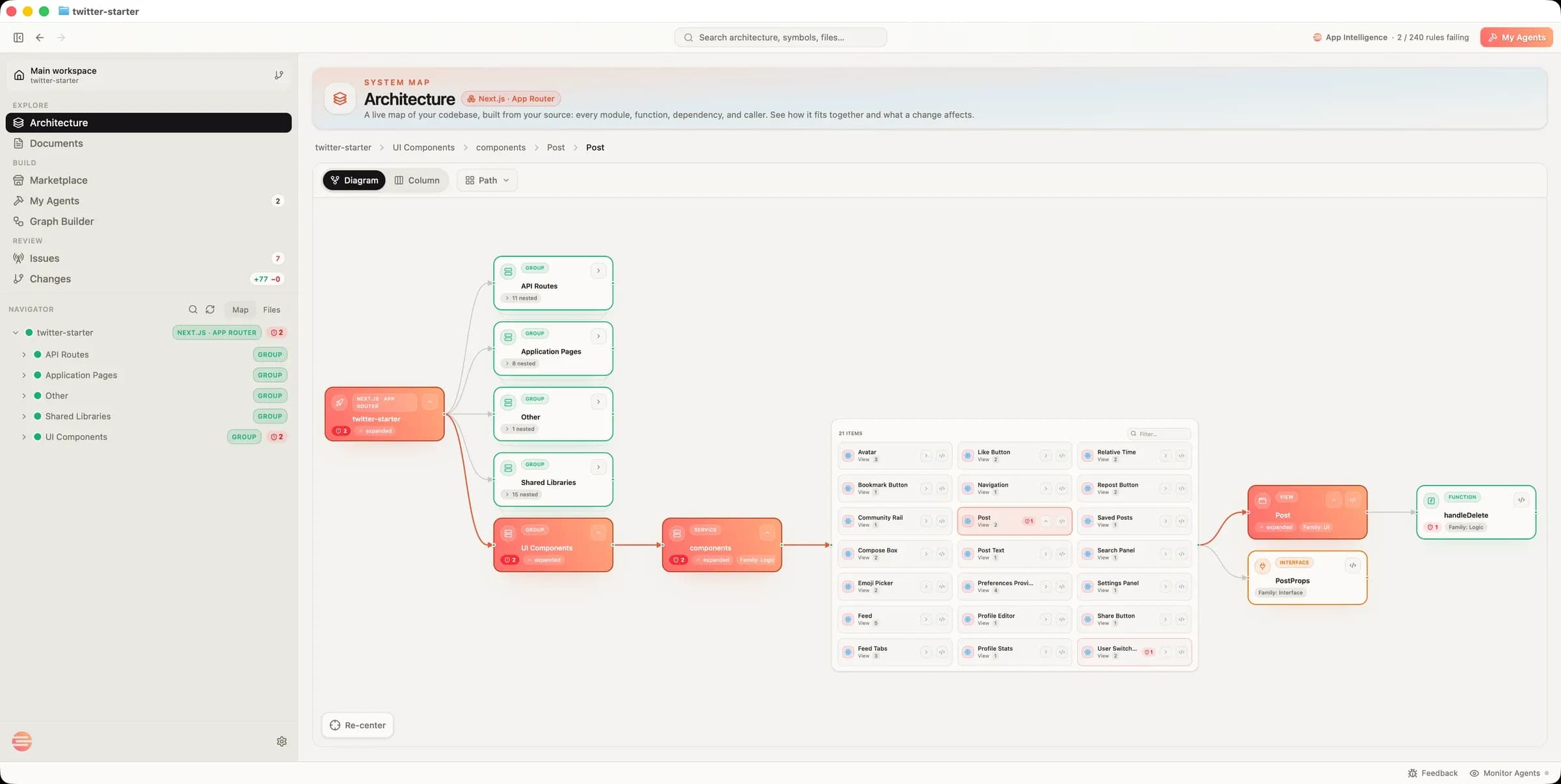
The useful question is bigger than whether a diff looks plausible. What behavior was intended? Which callers relied on the earlier behavior? Is the rule still applicable? A source-derived architecture view helps an engineer locate that relationship; a verification finding needs to explain the deviation at the function involved.
Make the next action concrete
A useful finding points to the rule, the source location, and the affected caller. That gives an engineer or a coding agent something specific to correct. Run the relevant checks again after the change, and distinguish an unavailable evaluation from a successful one.
Keep the decision with the engineer
In supported Panolayer workflows, new failures hold a managed merge. Engineers can inspect the result and the correction before deciding what ships. This connects generation to review without treating a model answer as a guarantee that software has no bugs.
A useful finding points to the rule, the source location, and the affected caller.